
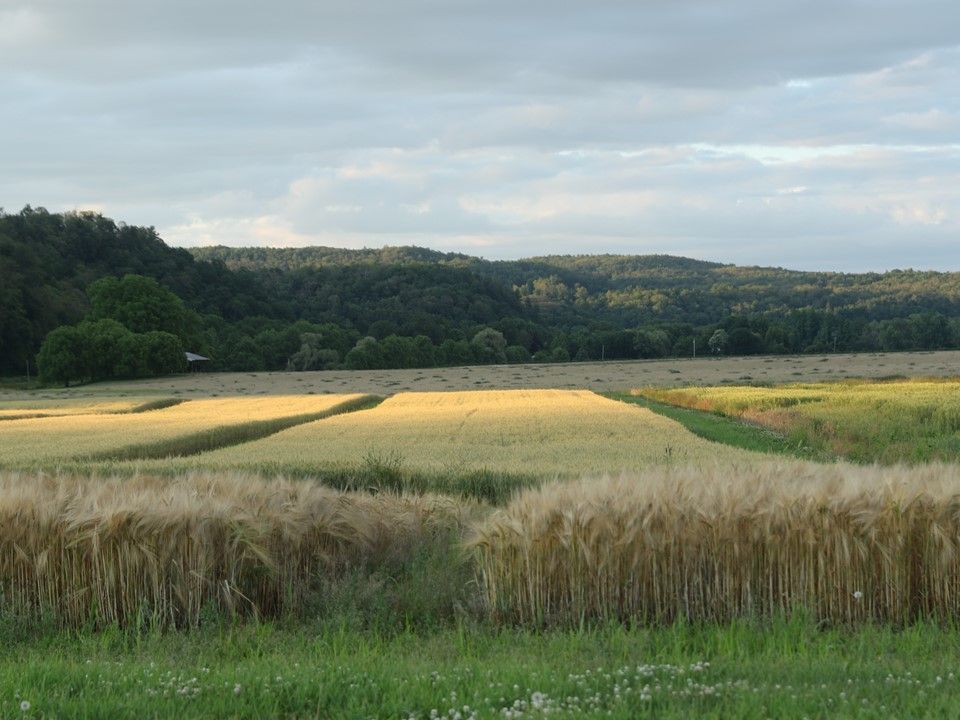
Are farms habitat for wild organisms? Were you a turtle, a sparrow, a bat, a butterfly, an ant, a microbe or even an aster, where on a farm might you find a welcome? We ask this question for a couple of reasons: First, given that farmlands occupy much of our landscape, what role do they and can they serve in biodiversity conservation? Second, what role, in turn, might that wild biodiversity play in farm production, be that as a beneficial creature (such as a pollinator or pest predator) or as a pest or a weed?
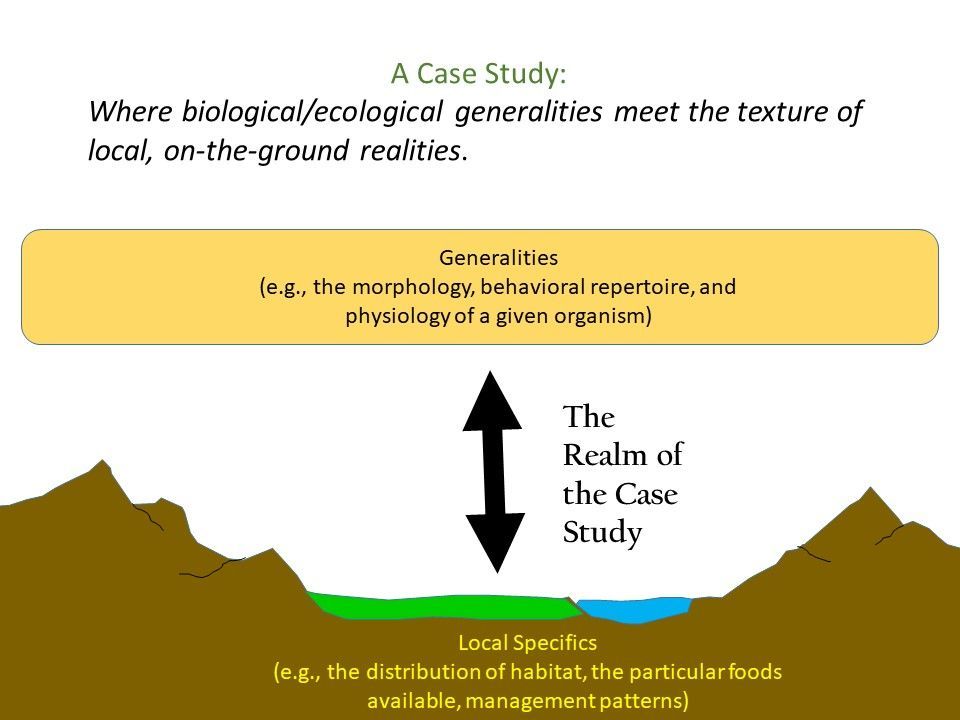
The answers to the above questions are going to be very site dependent. The management of the farm, the crops grown, the size of the fields, the patches of semi-wild habitat, the biogeographic location, the climate and the topography will all affect what a particular farm offers ecologically. While expansive studies across multitudes of farms might be able to pull out useful generalities, such studies would also hide the nuances that will characterize each situation. Founded in 2016 as a collaboration between the Farm Hub and Hawthorne Valley, the Applied Farmscape Ecology Research Collaborative (usually affectionately or at least practically shortened to “AFERC”) focuses on taking a long-term, multi-taxa deep dive into the ecology of a single Hudson Valley farm, the Farm Hub itself. This is a case study with the strengths (deep on-the ground detail) and weaknesses (uncertain replicability or generalizability of results) that that implies.
Above ground, researchers have done year-around habitat surveys for birds, with specific interest in the use of over-wintering cover crops; created vegetation maps and documented the botanical changes in seeded habitats; radio tracked wood turtles and grassland birds; tried to understand nutrient connections between terrestrial and aquatic habitats; and monitored insect populations from forest to field and in created habitats. Below-ground work has tried to understand the patterning of soil microbe and invertebrate communities and the evolution of ‘soil health’ in different semi-wild habitats. While such work has helped inform site-specific management, it can, as with any case study, also surface patterns or relationships that might be relevant elsewhere.
Applied Farmscape Ecology Research Collaborative Projects
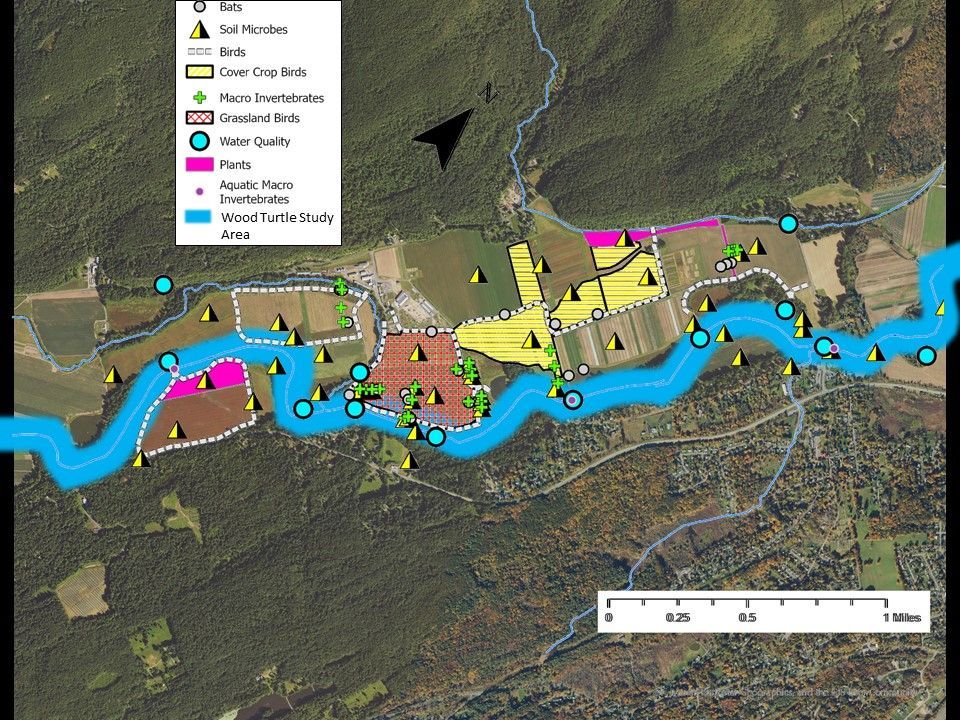
Squint your eyes and think a little bit about what this figure shows. On the one hand, it’s cluttered! Biologists have tromped around quite a bit of the Farm Hub in search of various organisms. From the perspective of wild biodiversity, it’s probably fair to say that this is one of the Hudson Valley farms whose ecology had been most extensively studied. At the same time, if you try to focus on any one group of organisms or type of study, then you quickly realize that there are many gaps. The fact is we can’t be everywhere all the time, and what we don’t know is surely much greater than what we do know.
This posting is a ‘tasting’ of the AFERC case study at the Farm Hub. Don’t expect all the pieces to neatly mesh – think of it more as an ecological farm tour or cheese platter rather than as an explanation of how it all goes together. It’ll begin by introducing a few of the researchers and little snippets of their work and then wrap up by suggesting ways in which some of the work might overlap. If you think you notice an insect bias, then I plead guilty – it is the group I happen to work with most.
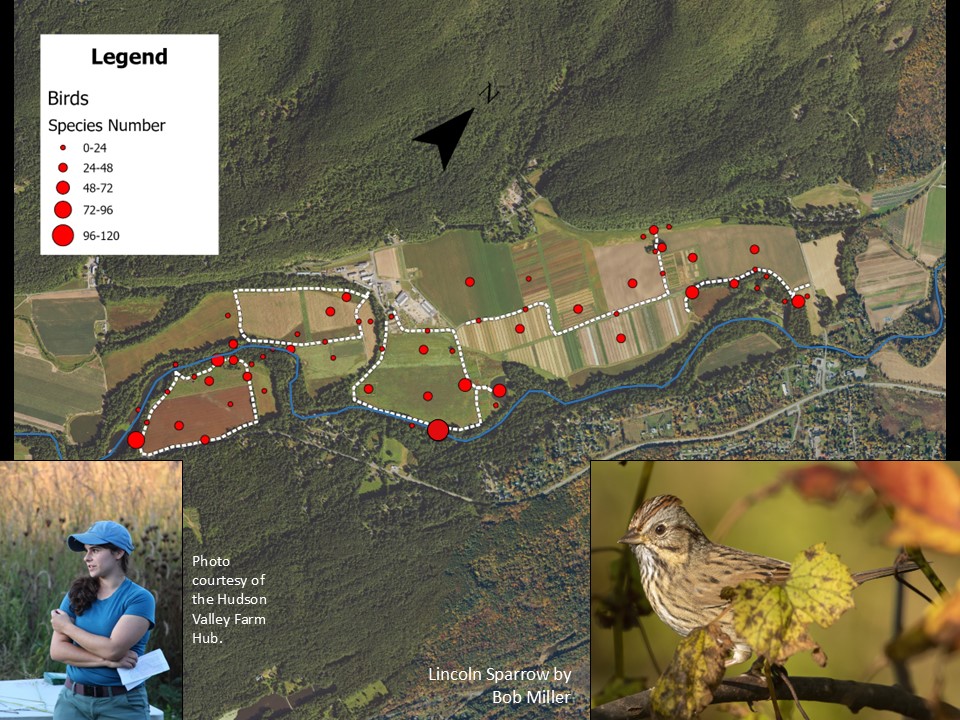
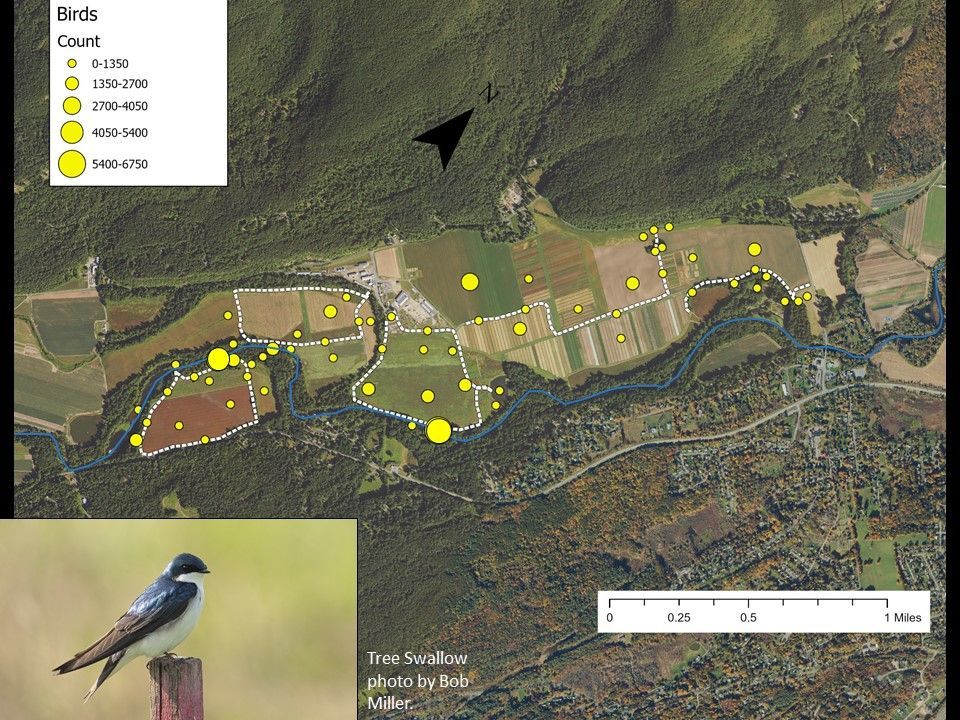
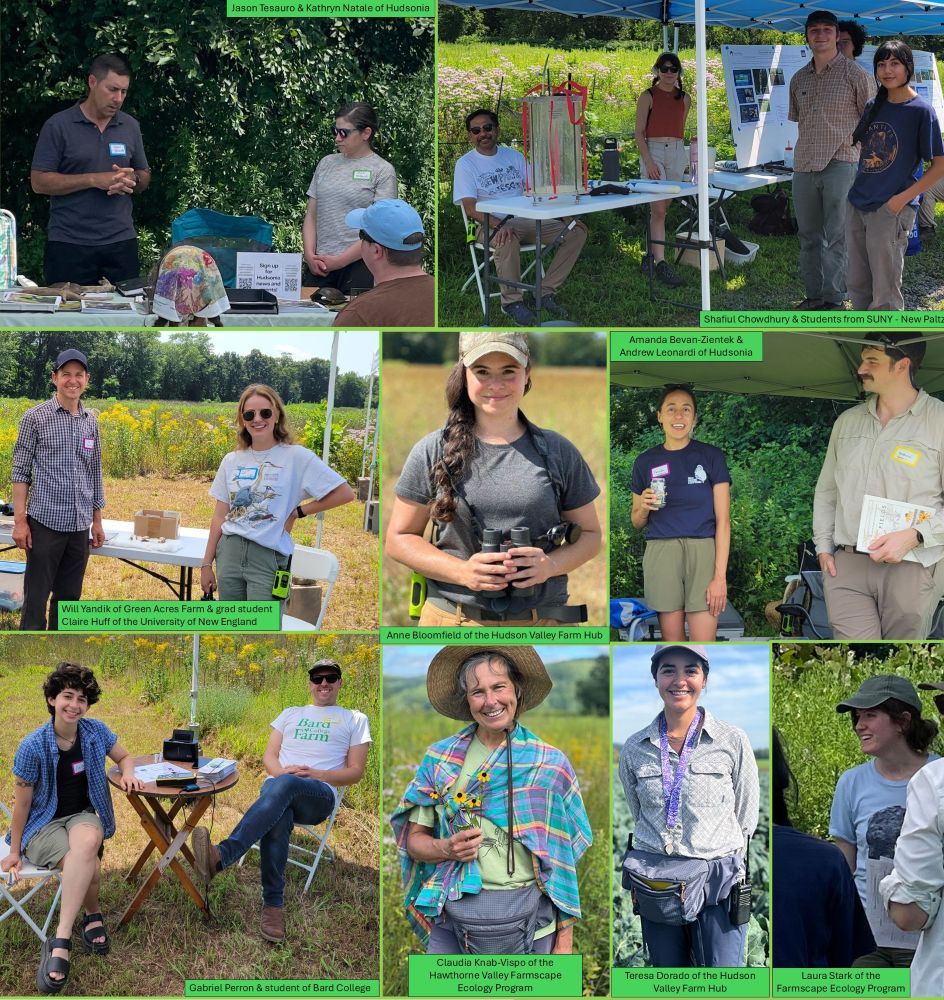
Anne Bloomfield, the Applied Farmscape Ecology Program Manager at the Farm Hub, has been supervising and, in many cases, personally conducting monthly bird surveys along a set of fixed routes at the Farm Hub since 2016. During the course of these surveys, Anne and her colleagues have recorded over 105,000 individual bird sightings and nearly 200 species. One can use these data to ask, where are birds most numerous and where are they most diverse on the farm? While numbers and diversity often go hand-in-hand, one need only think of the multitude of Canada Geese in a single field flock or the swirling clouds of Starlings to realize that, at least with birds, numbers and diversity are not always linked. Notice how on these two maps, some streamside locations do have a bird life that is both abundant and diverse, while some in-field sites apparently host multitudes of individuals, but do not support a large diversity of species.
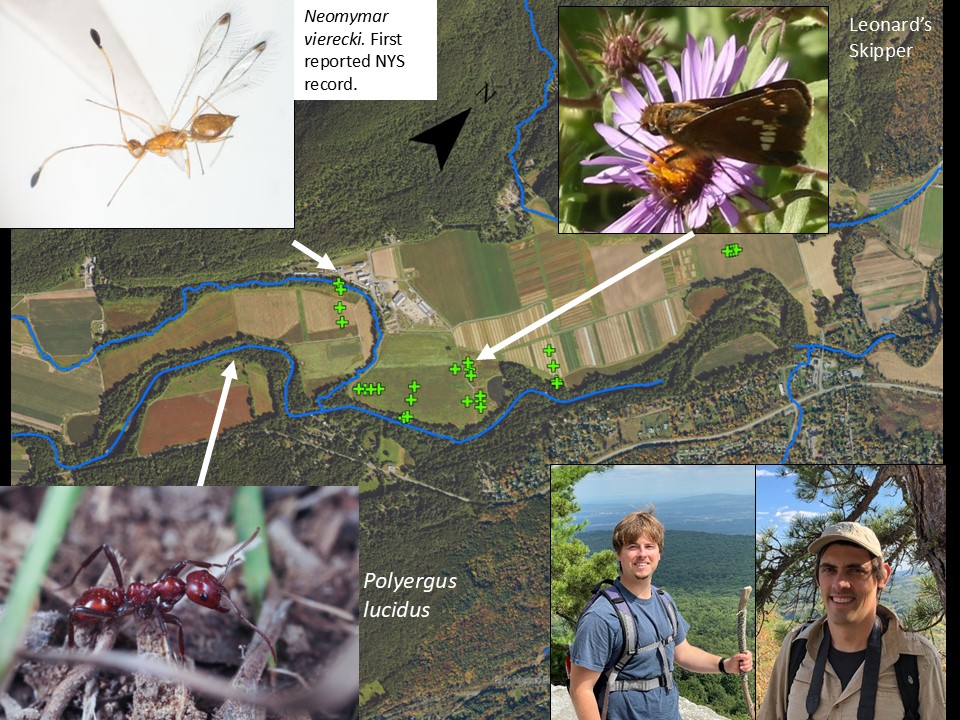
Most above-ground insect (and other macroinvertebrate) study has occurred at a few relatively restricted locations on the farm: the seeded native meadow trials, the long-term forest-to-field transects and the experimental beetle bank. While I could exhaust your patience with various graphs of treatment effects or distance-from-wilds patterns, I’ll just highlight a trio of exciting sightings (the entomologist’s equivalent of finding that rare warbler or unusual orchid). Kyle Bradford of FEP identified Polyergus lucidus, the Amazon Ant, which is a so-called slave-making ant and depends on subverting the work of other ant species to its own ends. This appears to be the first record of the species in Ulster County. The tiny, feather-winged wasp was identified by Kendrick Flower (also of FEP) as Neomymar vierecki. It probably parasitizes the eggs of other insects but, intriguingly, we don’t know who those hosts are. Due to intricacies of aerodynamics and scaling, the smallest insects often have feather-like wings. To the best of our knowledge, this species has not previously been recorded from NYS. Finally, Leonard’s Skipper is a regionally rare little butterfly of native grasslands. This one popped up next to some of our native grass plantings and is one of the very few recorded sightings of this species in Ulster County.
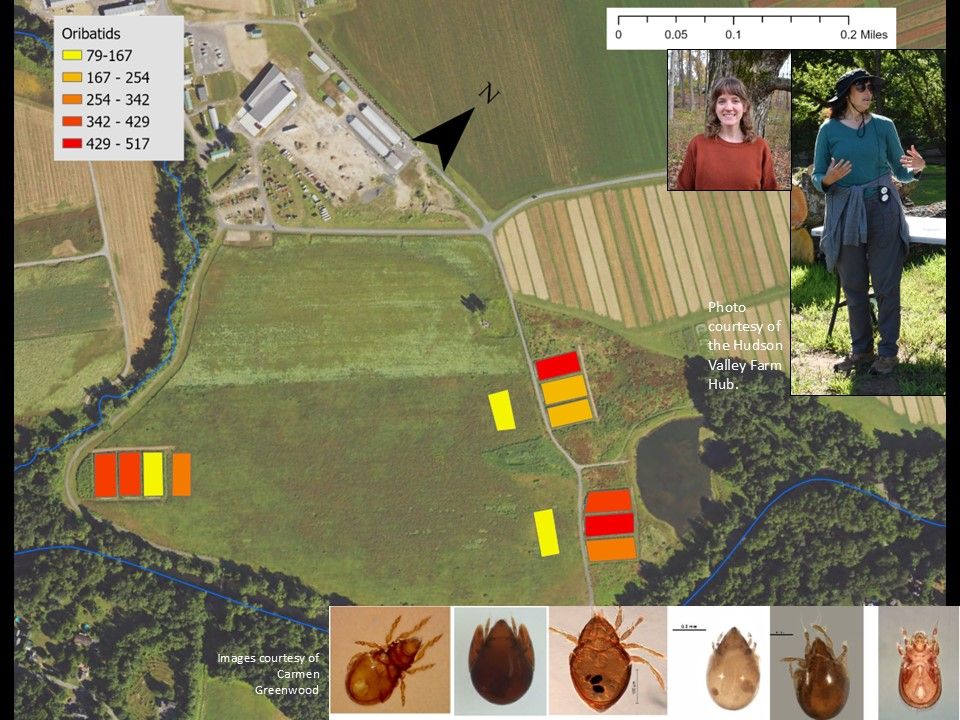
Work begun by Carmen Greenwood when at SUNY-Cobleskill (on the right in image) and now including the collaboration of Laura Stark of FEP has looked at below-ground macroinvertebrates (as opposed to microbes). These include earthworms, springtails (perhaps most familiar as snow fleas), various beetle grubs, and mites, amongst other creatures. One group that Carmen has focused on are the oribatid mites. These small, roundy creatures seem to be good indicators of soil health. This color-coded map shows oribatid mite abundance in our native meadow trials. Again, I’ll avoid the analytical deep dive and only note that there appears to be at least a 2-3 fold variation in mite abundances amongst our experimental plots and a hint that they may not favor the hayfield. Something to look into….
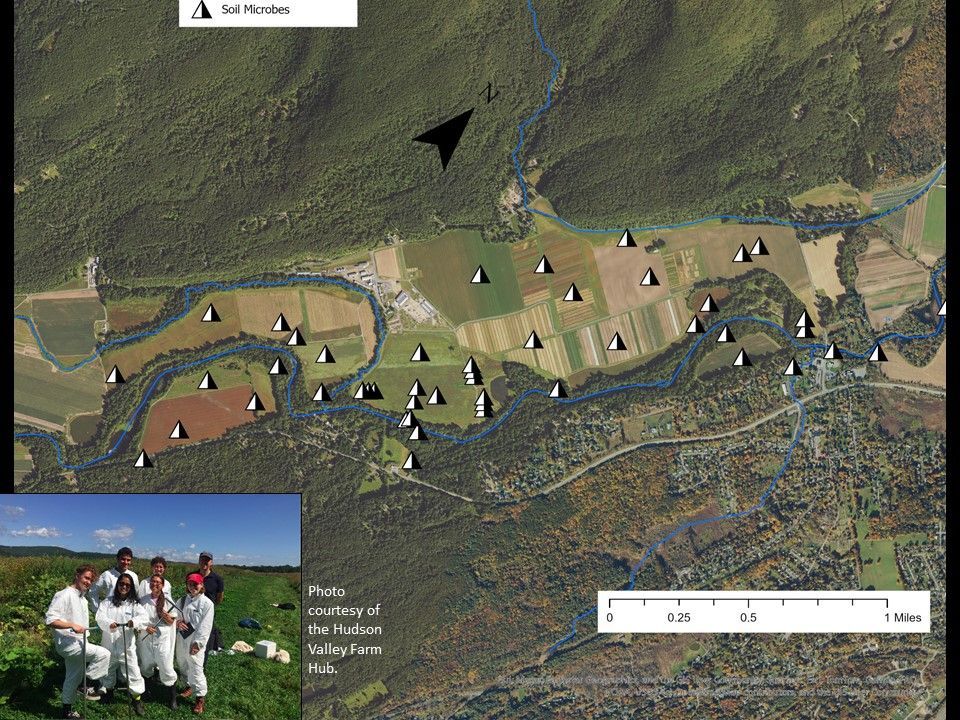
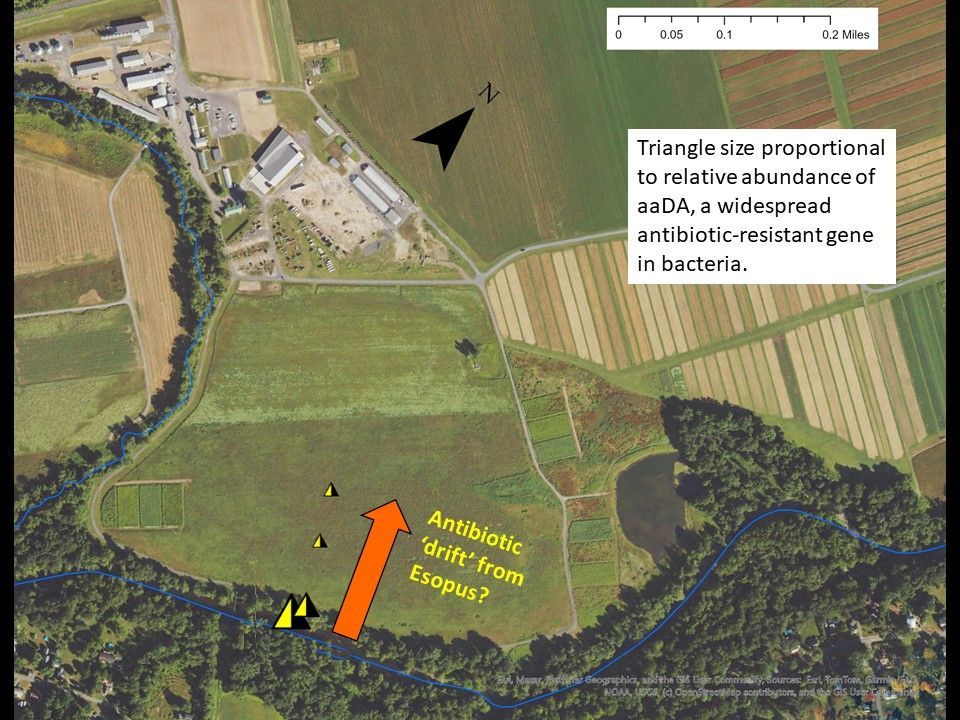
While Carmen and Laura looked at the soil macroinvertebrates, Gabriel Perron of Bard College and his collaborators and students have been looking at the microscopic soil organisms, that is, the microbes including bacteria and fungi. They have been trying to understand microbial diversity patterns across the various habitats of the Farm Hub. One particular focus has been on antibiotic resistant genes in bacterial communities. Such genes, while they can be favored by natural bacterial interactions with antibiotic-producing fungi, have also expanded because of widespread contamination of the environment with human-created antibiotics. The presence of these genes can pose a serious public health threat when they grant bacterial immunity to common medical antibiotics. In one recently submitted manuscript Gabriel and his co-authors describe how such genes are more common in microbial communities along the Esopus as opposed to in communities farther into the adjacent farmland. This may, in part, be due to the contamination of the Creek’s waters with antibiotic-bearing sewage and livestock manure.

Over the years, we have recorded bats at various sites around the Farm Hub. Rather than capturing them in mist nets, we use special recorders that detect and register their calls. Bats are relatively abundant on the farm, and these pie charts show who we have found where. Audio detection and identification is not perfect and not all species can be distinguished but, even so, it’s evident that the Farm Hub supports a diversity of bats. Amanda Bevan Zientek and Andrew Leonardi of Hudsonia have begun studying the habitat use of the rare Tri-colored Bat and, as described in greater detail below, I’ve been trying to follow bat activity around the pheromone traps that Teresa Dorado of the Farm Hub maintains for monitoring Sweet Corn pests.
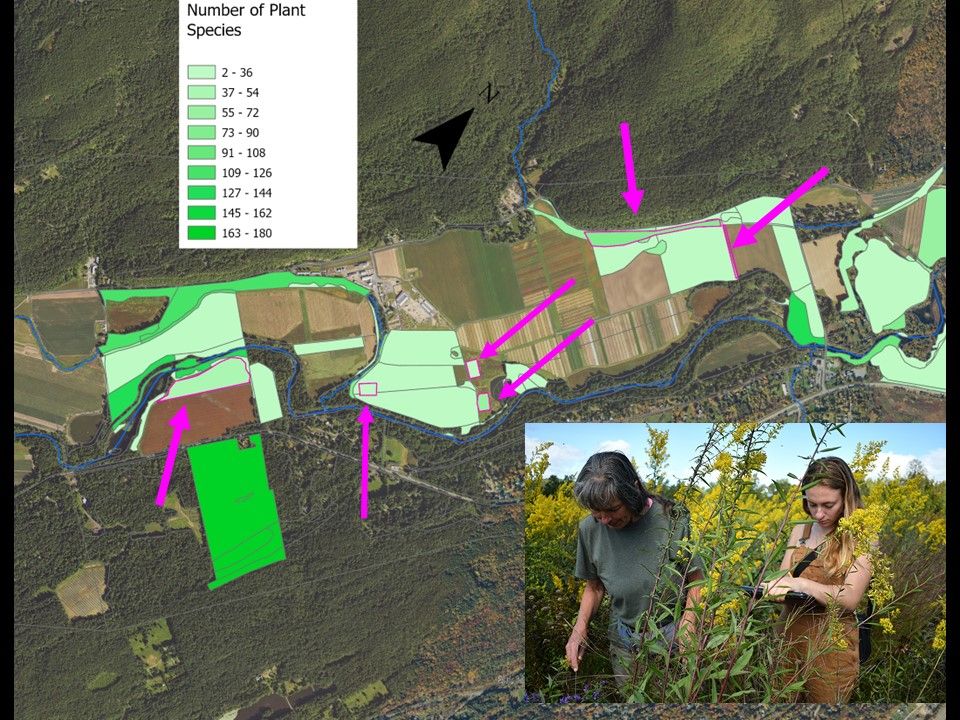
The plants at the Farm Hub may be the most extensively studied group of organisms. Back in 2015, Claudia Knab-Vispo of FEP surveyed plant diversity in various habitats around the Farm Hub, producing this map of diversity. Not surprisingly, forests and forest edges had the highest diversity of plants. More recently Claudia and Josie Laing, also of FEP, have been closely following changes in plant diversity at a few sites around the Farm Hub, including the Native Meadow Trial sites, the wetland along Hurley Mountain Rd. and a large seeded meadow across the Esopus.
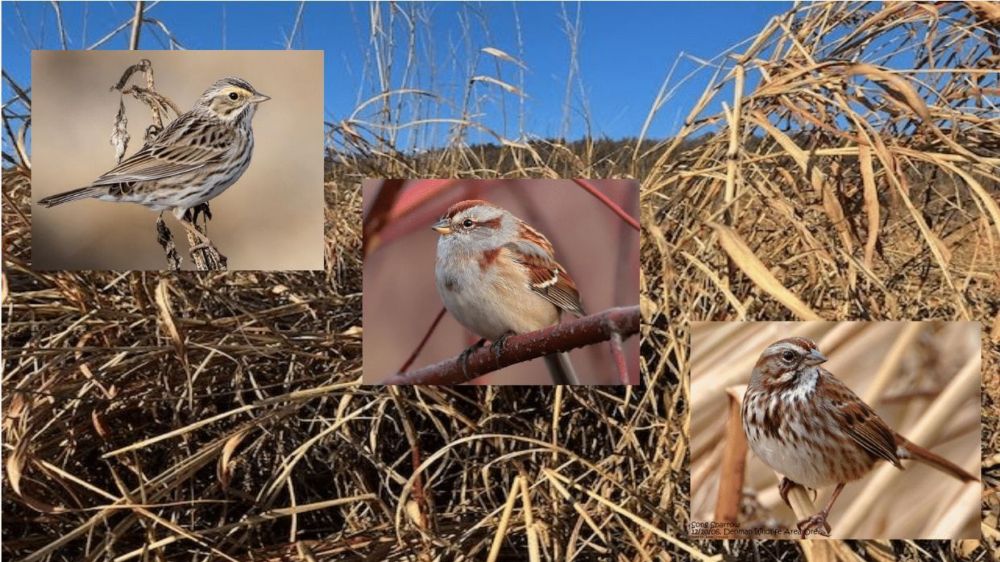
Will Yandik is both a farmer (of Green Acres Farm) and a freelance ornithologist. Not surprisingly perhaps, Will has thus brought a keen interest regarding how farming activity and bird habitat use intersect. Specifically, can farmers enhance habitat for overwintering birds through their selection and management of winter cover crops, like Sorghum-Sudan Grass? His work has suggested that allowing seed-bearing Sorghum-Sudan to overwinter uncut in the field can provide both food and shelter to some of our winter-time sparrows.
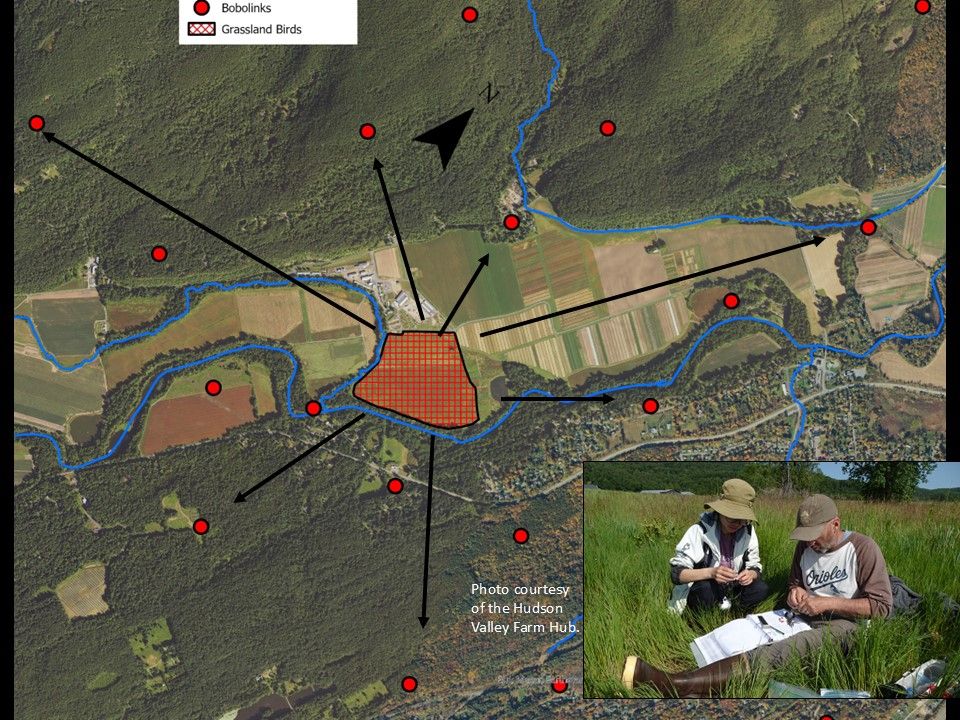
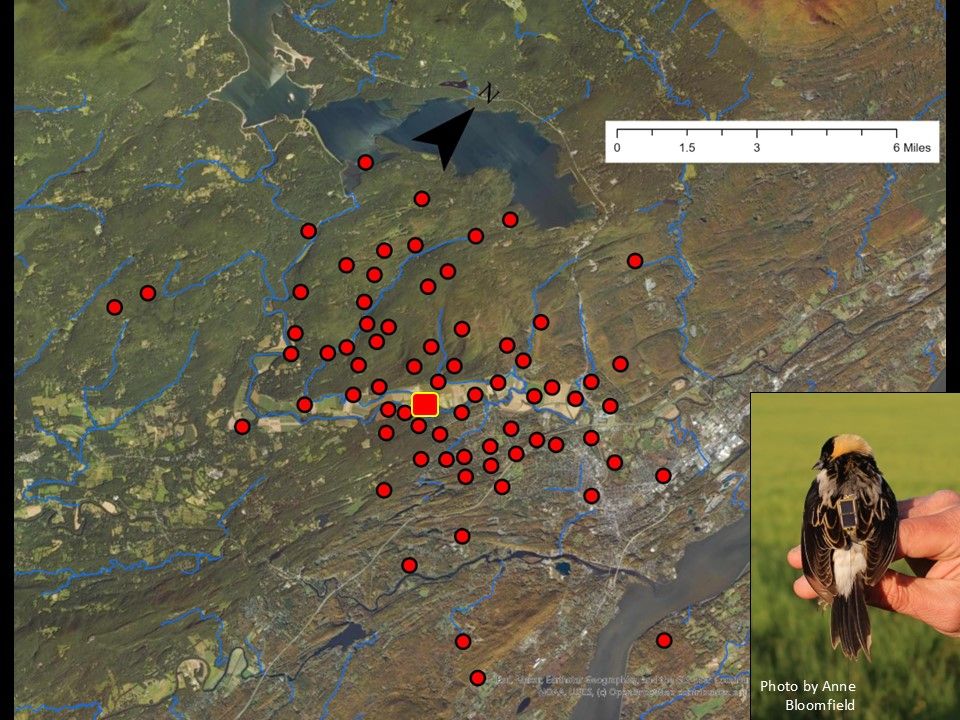
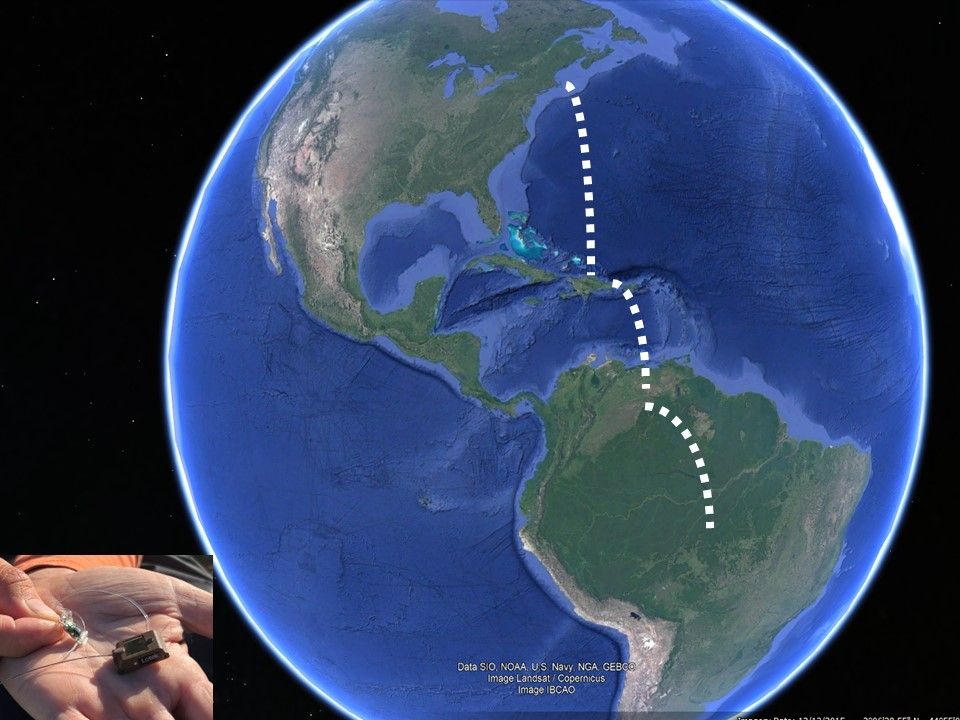
Another person watching the birds at the Farm Hub has been Noah Perlut of the University of New England. Assisted by talented graduate students Violet Wu and Claire Huff, Noah’s work has explored grassland bird ecology at the Hub. His use of radio tracking and satellite tags has revealed the movements of Bobolinks at various scales, including not only the Esopus Valley-wide summer wanderings of errant males but also the species’ transcontinental migrations to South America. For birds such as these, not only nesting habitat, but also habitat along their migration route and at their overwintering sites is crucial.
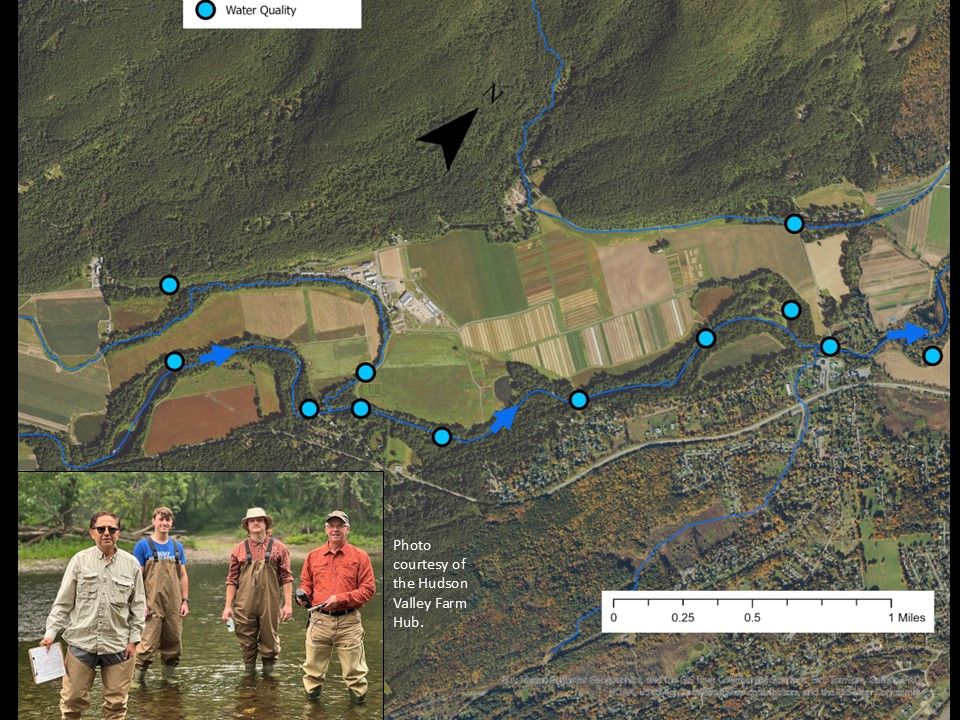
Moving off of dry land and wading into the Esopus, Shafiul Chowdhury and his students from SUNY – New Paltz have been monitoring water quality along this creek as it flows by the Farm Hub. Fortunately, Shafiul first collected data in 2008, before the Farm Hub was even established. Do we have any evidence that the Farm Hub’s land use (and that of others in the watershed) is affecting water quality in the Creek? His preliminary work seems to indicate that, if anything, nitrate concentrations have decreased from pre-Farm Hub levels, although there seems to be no trend since its establishment. Nitrate is one of the forms of nitrogen that can cause aquatic algal explosions and oxygen depletion (aka, “eutrophication”). His study of the patterns of nitrogen isotope occurrence (“isotopes” are distinct forms of a single element, and different nitrogen sources can be characterized by their isotopic composition) suggests that nitrogen found in the Esopus may be coming from fertilizers, soils and, potentially, manure and sewage. Upcoming microbiological assays may help clarify this. Shafiul’s work also involves in-field studies trying to understand how different fertilization and irrigation rates might be affecting the leaching of nutrients into the Creek – what is the sweet spot where fertilization produces good growth but leaves little excess nutrients to move into the Creek and groundwater?

Extending our (semi-) aquatic theme, Jason Tesauro (right), Erik Kiviat (left) and Kathryn Natale of Hudsonia have been radio-tracking Wood Turtles along the Esopus. We won’t present detailed maps of their results because of the risk of poaching (there’s a depressingly active black market for turtles), but that radio tracking has provided important details about how turtle movement and farming activity intersect – where and when are turtles most likely to be threatened by farm machinery? With this information in hand, it has been possible for the Farm Hub to tweak the uses of some fields so as to reduce the risk to Wood Turtles. The hope is that some of what we have learned locally can help suggest measures with wider applicability.
Interactions Among Organisms
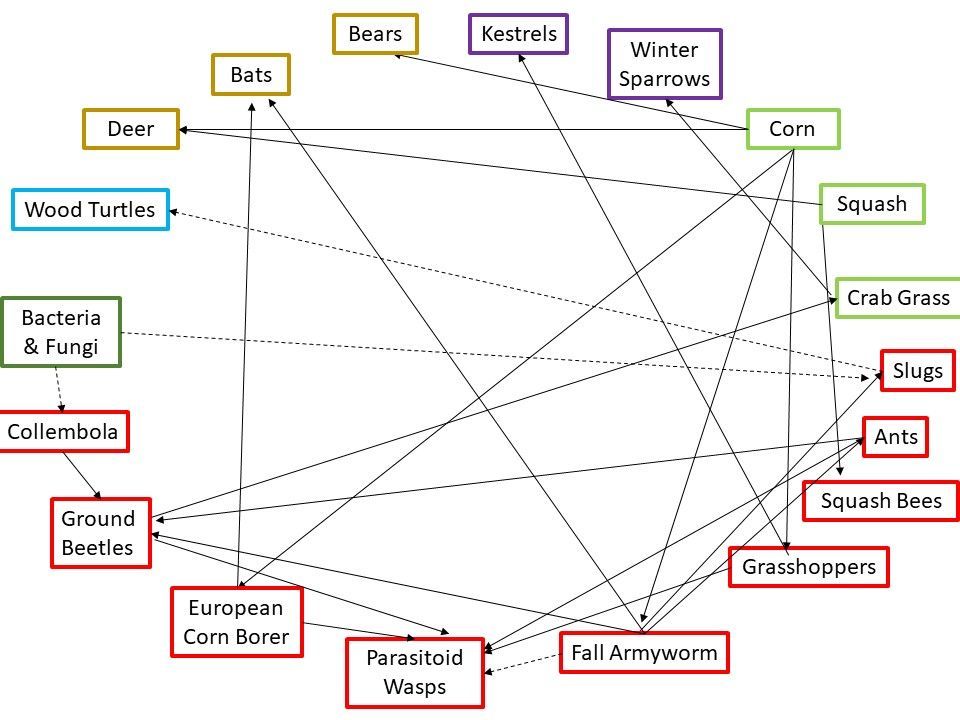
While looking at the occurrence patterns of particular organisms can be interesting and, as just described, important for their conservation, another strength of AFERC appears as one tries to explore the interactions amongst organisms. The farm’s ecological complexity is suggested by this VERY partial food web diagram based largely on links we have, in one form or another, documented at the Farm Hub. Nature is complicated and I think one arguable definition of industrial conventional agriculture is that it is a technique for simplifying that complexity so that the remaining system is more malleable to human design. In terms of immediate ease, one can see the appeal. Organic/ecological/regenerative agriculture must also produce food, but one hope is to better understand the natural complexity and work with rather than against it whenever possible. On-going DNA work is trying to fill out this food web in greater depth. Below are a few more detailed examples of such interactions. Again, apologies for my bug-bias!

Earlier, I mentioned that we have maintained bat detectors at the same location as the pheromone traps that Teresa Dorado runs for pestiferous sweet corn moths. Our question is: does bat activity seem to coincide with moth abundance? While such a correlation wouldn’t prove that bats were helping to control these moths, it would at least indicate the possibility. This figure suggests if there is any such control, then it is probably happening in late July or early August (orange box in diagram, rather than earlier, when the pest moths don’t seem to be flying, or later, when bat activity is low. We are continuing this bat monitoring to see if this pattern repeats itself.
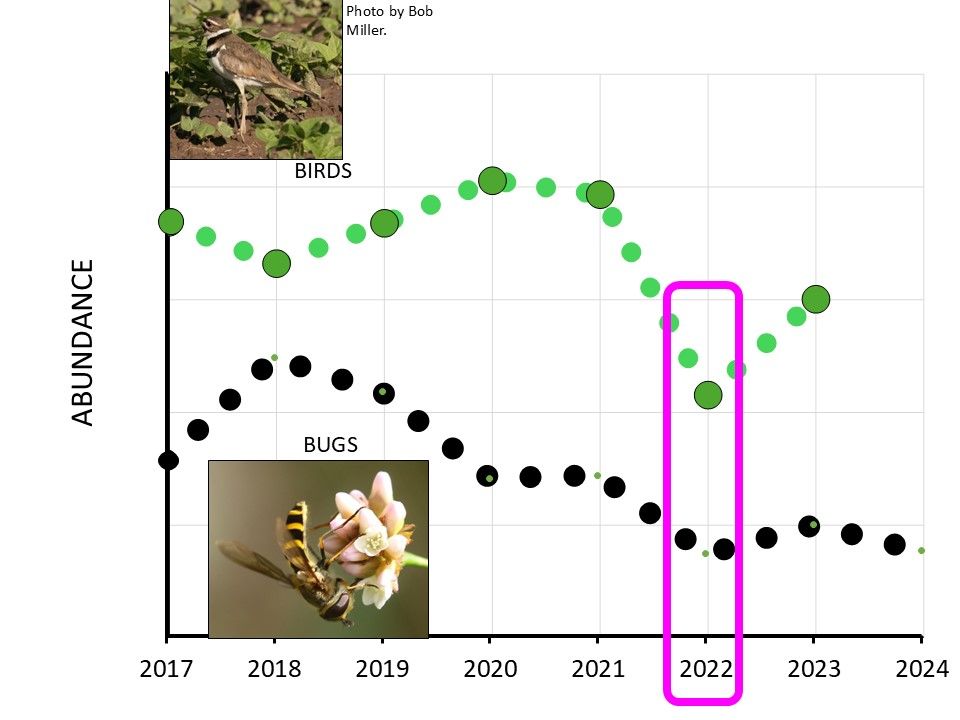
This figure shows another one of those patterns that is ‘suggestive’ but hardly definitive. Is it a coincidence that 2022, the year with the lowest rate of May-Sept bird sightings (birds seen/minute), was also the one with the lowest rate of June-Aug. insect captures? It might be, but one can also imagine that low numbers of insects, especially were they to occur during the breeding season, could result in reduced fledging (most birds, even the ones which are granivorous as adults, feed their young insects) and potentially even a decline in adult survival for some species.
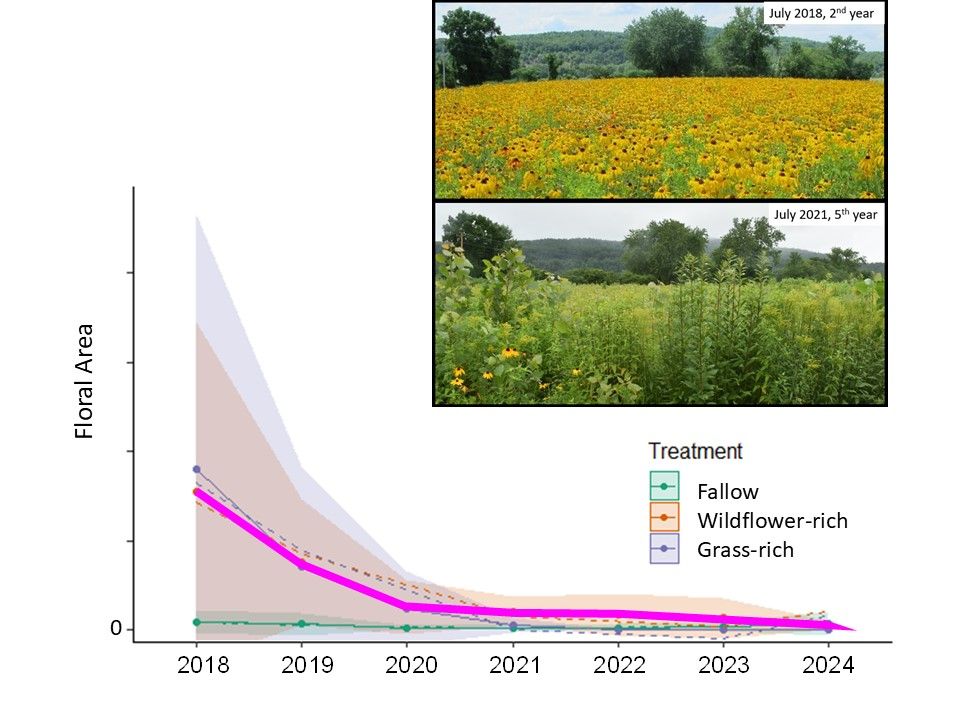

Bees may be our most well-known flower visitors, and it is logical to suggest that their localized abundance should be correlated with flower availability. Our native meadow test plots, where we have concurrent flower and insect abundance data, allow us to explore this pattern in some depth. Briefly, as part of an experiment looking at the effects of following USDA-NRCS and Xerces recommendations for on-farm wildflower planting, three half-acre wildflower meadows were seeded in 2017. Since then, we have monitored insects and flowers. After an eye-catching burst of flowers during the early years, flower abundance has declined sharply. What did the bees think of that? The second figure suggests that bees were a bit slow off the mark, but that bee captures did increase dramatically during the middle years. However, bee captures have since declined sharply and now approximate those in adjacent fallow land, raising questions about the enduring value of wildflower plantings (but also encouraging us to perhaps re-evaluate the utility of fallows). As Xerces and others have suggested, if you want to maintain high flower abundance in such plantings, you might need to periodically rejuvenate them.
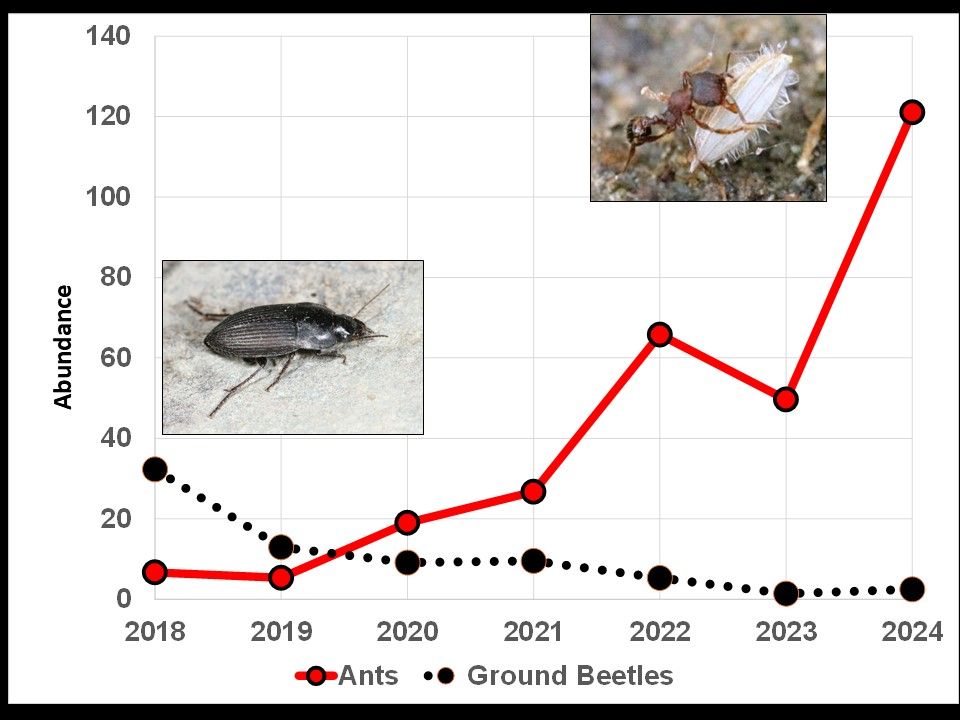
Here’s another graph that suggests a negative interaction between two groups of organisms. The graph shows a roughly 90% decline in ground beetle captures and a roughly 20-fold increase in ant captures over the past eight years in our native meadow plots. It is easy to make up a just-so-story suggesting there is cause and effect here – for example, perhaps ants increase for some undetermined reason and, as energetic scavengers, they consume ground beetle eggs and/or larvae. Or perhaps, ground beetles declined for some other reason and, since many ground beetles are predators, this decline demographically ‘released’ ants. Our current thought, supported by some stats and anecdotal observations, is that the cessation of ploughing in our plots has favored ants (no more nest destroying plow blades) but somehow discouraged ground beetles of plowed ground (there is a set of common farm ground beetles, many of whom are non-native, who seem to specialize in a plowed-ground lifestyle).
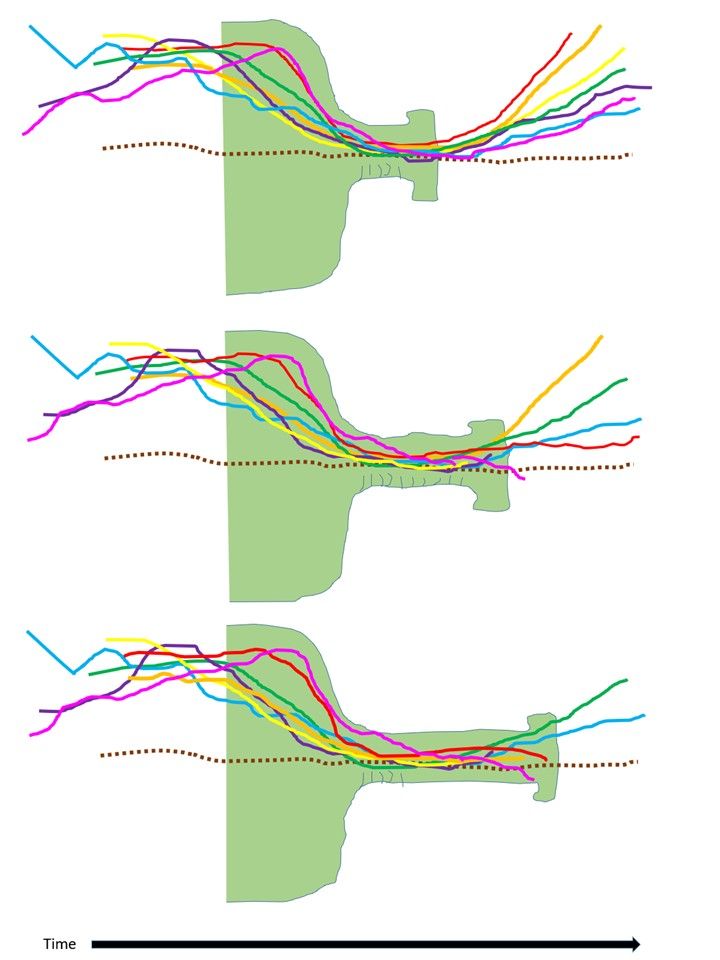
“Bottleneck” is a colorful term that biologists apply to a period when a species endures sharply reduced numbers before flourishing again. Of course, some species never come out the other side of their decline and instead go extinct. More broadly, one can picture whole biological communities experiencing ‘bottlenecks’. It is likely that many wild species are currently entering or experiencing such bottlenecks. Reasons are diverse, but habitat loss is often key. Amongst the species studied by AFERC, grassland birds, various turtles (including Wood Turtles), bats such as the Tricolored Bat, certain bumble bees and butterflies, and even some plants are experiencing historical lows in their population numbers. In this conceptual diagram, the demographic trajectories of some such species are represented by the colored strands feeding into the bottle’s neck. How many will come out the other side with intact, functional populations? The answer likely depends on the length of the bottleneck. Low population sizes increase the likelihood of extinction, so the longer the bottleneck, the more likely it is that species will be lost. Single-handedly, most of the work described here will not save a species globally, but the Farm Hub’s efforts to improve the on-farm habitat for certain rarer species might give them a local boost that helps them persist through their bottleneck.
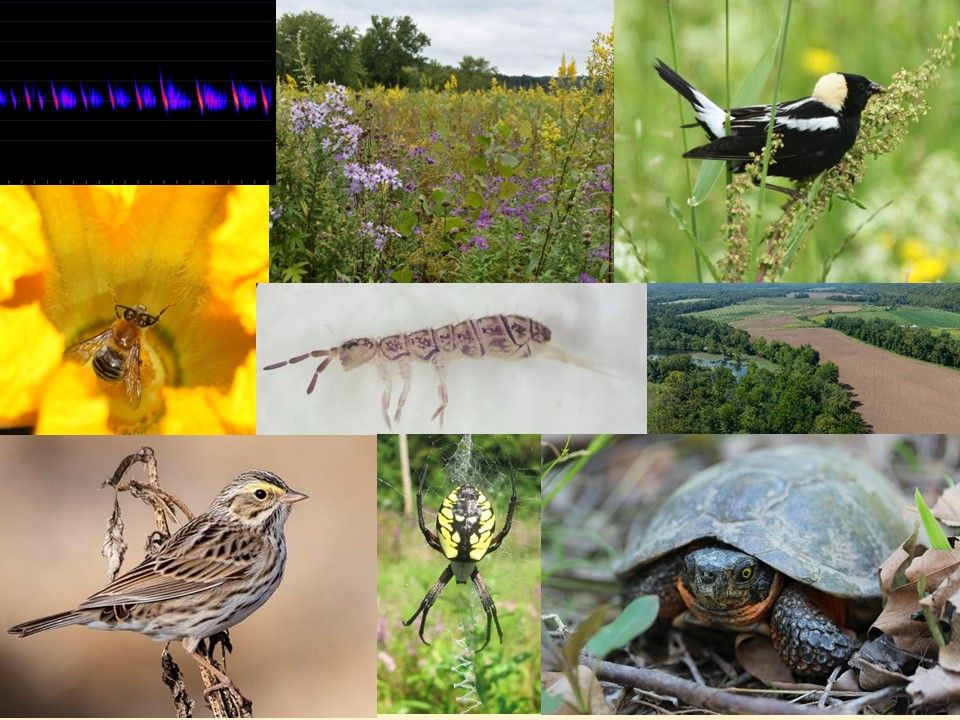
None of the species described here are crops. They may be positive, negative or irrelevant to crop growth. Thus, while we might ‘justify’ a study focusing on bee conservation as providing benefits to farmers, we have to admit that some other insects consume crops, and some organisms, such as Wood Turtles, might have a negligible effect on farm production one way or another. Indeed, the agroecological role of some species may vary across the year. For example, some species of birds may consume insect pests in spring and yet consume the crop itself later in the year. So, aside from justifying some of this work based on agroecological benefits, we also need to be upfront that we view nature conservation as an important end in itself. Nature conservation is neither a luxury nor a given – I can think of few deeper responsibilities than that of preserving and encouraging the non-human (and human!) life around us. And yet, we have the power to intentionally or incidentally make that life miserable. Work such as that outlined here helps highlight our effects on nature, heralding our positive contributions to Nature and calling out, and hopefully helping to correct, the damage we cause.
Conrad Vispo. PhD from Dept. of Wildlife Ecology, Univ. of Wisconsin-Madison. Conrad has studied vertebrate and invertebrate ecology, often in the context of conservation and human use. He has worked on Ground Squirrels in the Indiana summer, Ruffed Grouse in the Wisconsin winter, and freshwater fish in the tropics of Venezuela. He is one of the co-coordinators of the Hawthorne Valley Farmscape Ecology Program, which he helped initiate in 2003.